
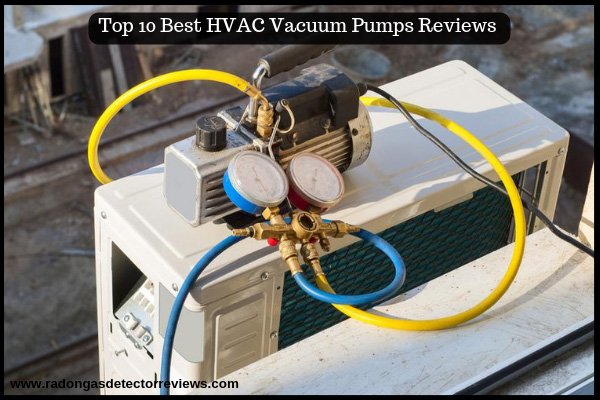
Best HVAC Vacuum Pumps Review: HVAC vacuum pumps are among the widely used systems for related applications. As an HVAC technician, your job is to identify problems and fix them so they don’t hinder future processes. However, a poor vacuum pump leads to system failure because it cannot draw or maintain the necessary vacuum level.
It allows contaminants in the refrigeration system to accumulate, making the task even more difficult. Before we share the in-depth, best HVAC vacuum pump review, here’s some mandatory background information.
Table of Contents
Best HVAC Vacuum Pumps Review from Amazon: Comparison
| Ranking. | Products. | Our Rating. | Check Price. |
| 1. | 1. | 4.4/5 | VIEW ON AMAZON |
| 2. | 4 CFM | 4 CFM | Less than 30 tons |
| 3. | 4 CFM | 4 CFM | Less than 30 tons |
| 4. | Less than 50 tons | 4. | Less than 50 tons |
| 5. | Less than 70 tons | 10 CFM | Less than 70 tons |
| 6. | Less than 70 tons | 10 CFM | Less than 70 tons |
| 7. | Less than 70 tons | 10 CFM | Less than 70 tons |
| 8. | Less than 70 tons | 10 CFM | Less than 70 tons |
| 9. | Less than 70 tons | 10 CFM | Less than 70 tons |
| 10. | Less than 70 tons | 10 CFM | Less than 70 tons |
| Ranking. | Our Rating. | Check Price. | |
|---|---|---|---|
Robinair 15500 VacuMaster Economy HVAC Vacuum Pump | VIEW ON AMAZON | ||
Kozyvacu 5CFM 2-Stage Rotary Vane HVAC Vacuum Pump | VIEW ON AMAZON | ||
Robinair 15800 VacuMaster Economy HVAC Vacuum Pump | VIEW ON AMAZON | ||
XtremepowerUS 3CFM or 4CFM Air Vacuum Pump HVAC A/C Refrigeration Kit AC Manifold Gauge Set ( 3CFM 1/4HP Air Vacuum Pump) | VIEW ON AMAZON | ||
Robinair (15310) VacuMaster Single Stage HVAC Vacuum Pump | VIEW ON AMAZON | ||
MASTERCOOL 90066-HVAC Vacuum Pump | VIEW ON AMAZON | ||
Robinair 15115 VacuMaster Single Stage HVAC Vacuum Pump | VIEW ON AMAZON | ||
FJC (6909) 3.0 CFM HVAC Vacuum Pump | VIEW ON AMAZON | ||
ZENY 3,5CFM Single-Stage 5 Pa Rotary Vane Economy Vacuum Pump 3 CFM 1/4HP Air Conditioner Refrigerant HVAC | VIEW ON AMAZON | ||
TMS 3 CFM Single-stage Rotary Vane HVAC Vacuum Pump | VIEW ON AMAZON |
What is the HVAC Vacuum Pump?
Most heating, ventilation, and air conditioning systems need to remain free of moisture and other contaminants. Being resistant to such factors prevents freezing and corrosion of the system. But what if circumstances arise in which some kind of pressure develops? How can a user or technician vent out the exertion? HVAC Vacuum pumps are what you need! But what is an HVAC vacuum pump? It’s a mechanical device that helps maintain the pressure inside a container and release it into the atmosphere. A vacuum pump evacuates contaminants from the refrigerant system, keeping it leak-free, moisture-free, and fully functional.
Types of Vacuum Pumps
As for the types, there are multiple designs to serve varied purposes. However, a broad classification is agreed upon for a better understanding. Therefore, the types of vacuum pumps include:
- Positive displacement
- Momentum transfer
- Entrapment
Positive Displacement
Since an increase in the container’s volume can create a partial vacuum, you can vacate the chamber without increasing its size or shutting off the suction, evacuating the air and further expanding it again. This eventually helps fill in the void, creating a differential pressure.
Momentum Transfer
These use positive-displacement pump techniques; however, their primary purpose is to add momentum. As the gas molecules accelerate, traveling from the void towards the exhaustion side, the latter creates a positive displacement. The air pressure remains minimal, and such pumps are more usable at specific pressures. The exact operation, however, depends on how the molecules behave when they interact.
Entrapment
Using chemical reactions, the entrapment pumps create a vacuum, allowing the process to take place within the targeted area. Hence, these types of HVAC vacuum pumps are highly effective at removing a thin film of molecules from the internal surface. These are frequently used in combination with both positive displacements and momentum transfer.
What is an HVAC Vacuum Pump Used For?
You may ask, what’s the purpose of a vacuum pump, or what is an HVAC vacuum pump used for, essentially? So, here’s what you need to know –
There’s a need to evacuate moisture from refrigerant systems, as only oil and refrigerants should circulate. So, not only moisture but also nitrogen and oxygen are considered unwanted components that can damage the system. Therefore, what is an HVAC vacuum pump used for, or what’s the purpose of a vacuum pump? It is simply used to maintain the quality of equipment and other parts.
- The vacuum pump helps remove acid formation in the refrigerant.
- It removes gas from the system, creating a partial vacuum.
- It also removes unwanted vapours from the air conditioning system.
- Piping impurities can also be removed.
- It eliminates the need for electroplating and prevents motor insulation damage.
- Vacuum pumps reduce the risk of a short circuit.
- It maintains the system’s efficiency.
- Since sludge can easily form due to moisture, dirty oil, and acid, a vacuum pump will help prevent it and ensure proper operation.
- Where are HVAC vacuum pumps applied? Composite moulding, air conditioner cleaning, fusion research, etc.
- In addition to HVAC, vacuum pumps are used in medical procedures and other applications.
Best HVAC Vacuum Pumps Review From Amazon: Top 10(Updated 2026)
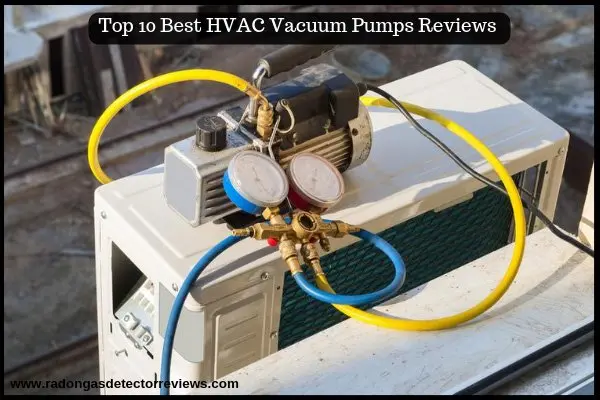
1. Robinair 15500 VacuMaster Economy HVAC Vacuum Pump Review
The Robinair 15500 VacuMaster Economy Vacuum Pump is a capable 2-stage design pump that efficiently and deeply cleans a faulty system.
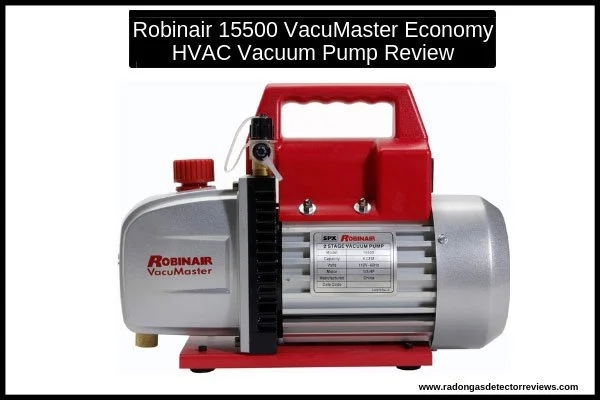
It comes with a 1/3 HP motor that delivers high torque. Bearings remain secure and sealed, resulting in vigorous operation. It is one of the best HVAC vacuum pumps, meeting high-quality standards and suitable for the associated functions. The moisture-removing capabilities reduce evacuation time. The filtration process again prevents foreign particles from entering the pumping chambers and damaging the vacuum pump. The filters are internally mounted to separate the exhaust from oil vapours. In addition to its features, this refrigeration vacuum pump stays cool throughout the process to prevent unforeseen issues.
- Professional choice.
- Well, a known brand.
- High performance and capacity.
- 2-stage vacuum operation.
- Heavy-duty motor.
- High performance and capacity.
- Durable.
- Noiseless functioning.
- Low maintenance.
- Instructions aren’t mentioned clearly.
2. Kozyvacu 5 CFM 2-Stage Rotary Vane HVAC Vacuum Pump Review
The Kozyvacu 5 CFM 2-Stage Rotary Vane Vacuum Pump has been tested to perform various HVAC operations.
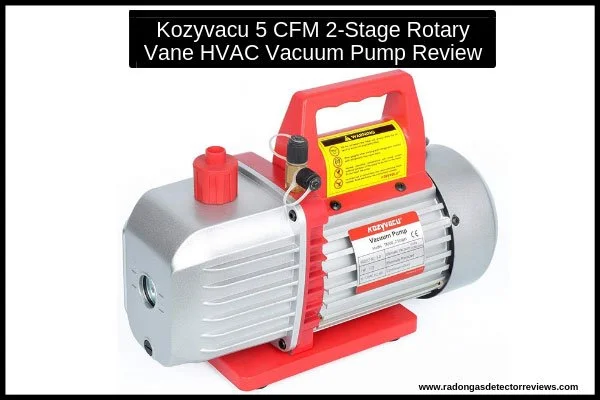
It delivers a pretty quick evacuation time. The product keeps working for long durations. It sports a durable aluminium housing, which makes the product lightweight and convenient, but the functionality can get tiring and troublesome. Also, the motor of this pump is thermally protected, which again allows for prolonged workability. The 2-stage rotary design makes the pump capable of diverse applications. It does not lead to overheating issues and even absorbs the shocks.
- High-efficiency pump.
- Low noise operation.
- Affordable.
- 5 PA vacuum evacuation.
- 5 CFM air displacement.
- Lightweight.
- Non-slip gripping pads.
- Convenient.
- Not for indoor use.
3. Robinair 15800 VacuMaster Economy HVAC Vacuum Pump Review
The Robinair 15800 VacuMaster Economy Vacuum Pump is a 2-stage, 2-a vacuum pump with an air displacement of 8 CFM.
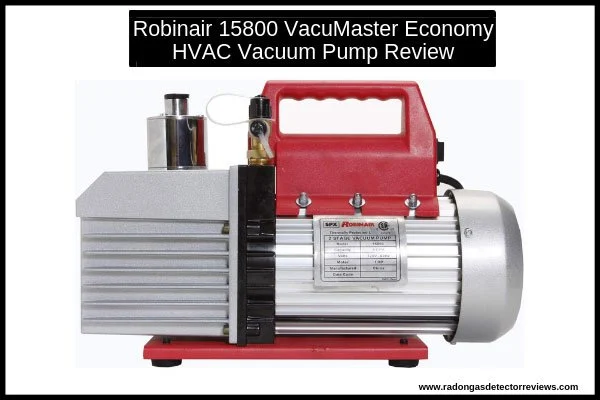
This makes the evacuation process much faster and gives the pump greater power, enabling it to be used for diverse applications. This pump is a bit more expensive than similar products. But, considering its specifications, the price point can still be given a second thought. It is a heavy-duty pump designed specifically for commercial HVAC uses. It has the necessary capacity to perform HVAC-related tasks and delivers more than 100%, which is why it has the tag - Amazon's Choice.
- Heavy-duty pump.
- Faster operation.
- Durable product.
- Two-stage design.
- High CFM evacuation.
- Thermally protected motor.
- Professional use.
- Non-skid feet.
- Oil included.
- Expensive.
4.XtremepowerUS 3 CFM or 4 CFM Air HVAC Vacuum Pump Review
The good news is that this HVAC vacuum pump comes with a comprehensive kit to make your tasks easier.
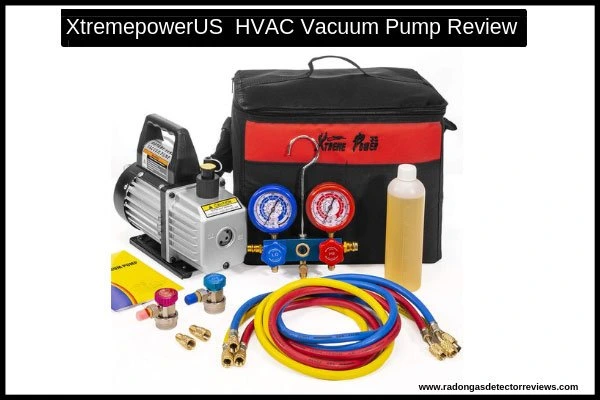
The XtremepowerUS 3 CFM or 4 CFM Air Vacuum Pump is easy to use and powerful. It does exactly what it's made for. The one-stage rotary motor is a highly efficient design that also produces less noise for better performance, regardless of its length. The built-in cooling fan again keeps the system free from unnecessary heating. The aluminium casing makes it lightweight and durable. Both handling and transportation are convenient, as the safety caps prevent leakage. What else? Having a greater capacity, the pump can pull off around 28 inches of refrigerant in less than 2 minutes. Pressure monitoring is made easy again, all thanks to the silicon-damped pressure gauges you receive in the kit. Colour-coded hoses come in a set of three, each measuring 36 inches.
- Affordable.
- Storage bag included.
- Colour-coded hoses.
- Comes as a kit.
- 1/3 and 1/4 HP models.
- Long-lasting.
- Durable aluminium alloy casing.
- Small job suitability.
- Not for heavy-duty jobs.
- The hoses are of low quality.
5. Robinair 15310 VacuMaster Single Stage HVAC Vacuum Pump Review
Having a well-designed aluminium alloy casing comes the Robinair 15310 VacuMaster Single Stage Vacuum Pump.
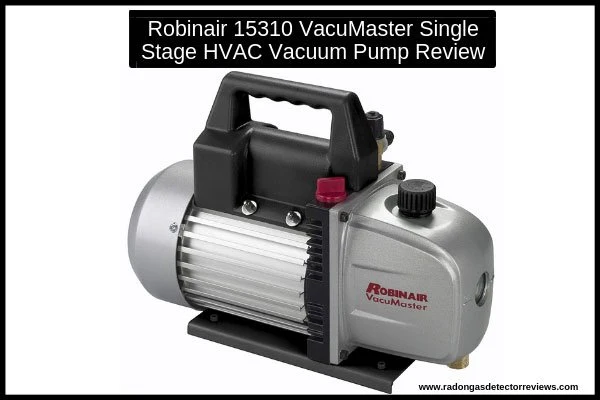
It is a single-stage, 3 CFM air-displacement vacuum pump that's efficient and true to its specifications. All Robinair products are reliable and can be used for a wide range of applications. The oil valve improves drainage, the machinery is lightweight, performance is up to the mark, and it is a cost-effective purchase. Operating this machine is pretty easy. However, the product isn't suitable for automotive repairs. But you can perform other related HVAC work. On the other hand, it does make some evident sounds, but you’ll get used to it over time.
- Great for HVAC maintenance jobs.
- Single-stage design.
- Aluminium alloy casing.
- Durable.
- The best residential HVAC vacuum pump.
- Easy to operate.
- Comes with vacuum oil.
- High-performance product.
- It can easily be used indoors.
- Efficient draining.
- Lightweight.
- Makes noticeable sounds/ vibrations.
6. Mastercool 90066-A HVAC Vacuum Pump Review
Another affordable and one of the best HVAC vacuum pumps is the Mastercool 90066-A, which is a perfect example of ultimate workmanship.
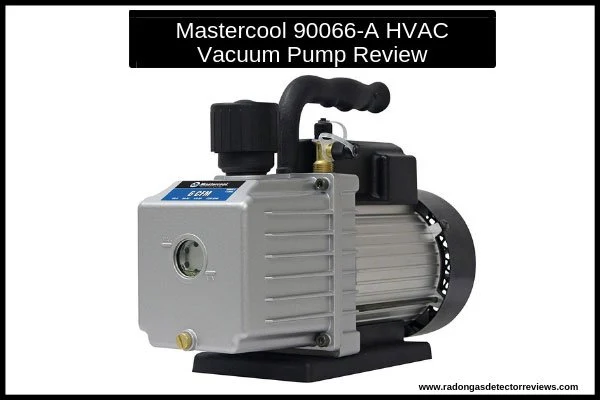
It is an ideal product for handling all your HAC needs. The Mastercool 90066-A is a single-stage pump with an efficient overall pull, thanks to its 6 CFM rating, making it a superior choice. The high-quality design keeps the operation noise- and vibration-free, while preventing any heating issues that may hinder your work. Oil valves are also perfectly built inside the product to avoid spillage. But, unlike other products, this one does not come with pre-filled oil, which is, anyway, a plus point since it wouldn't cause leakage while shipping.
The Mastercool 90066-A is one of the best residential HVAC vacuum pumps and is not recommended for heavy-duty commercial usage.
- High performance.
- Durable quality.
- Low price.
- Ultimate vacuum.
- Higher CFM.
- A single-stage vacuum pump.
- It isn’t a heavy-duty pump.
7. Robinair 15115 VacuMaster Single Stage HVAC Vacuum Pump Review
If you do not want to invest heavily in professional HVAC services, consider the all-rounder Robinair 15115 VacuMaster Single Stage Vacuum Pump.
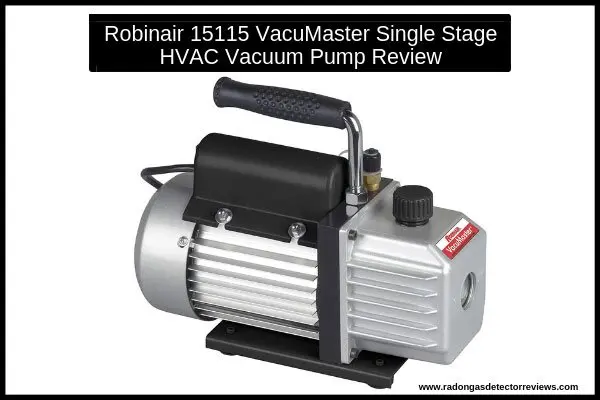
It's affordable, efficient, and durable, so it can keep going for years. The product operates very quietly and significantly reduces unnecessary vacuum. 1.5 CFM free air displacement does the job fairly well. Additionally, the 1/5 HP motor quickly pulls around 115 microns. Non-skid feet and a perfect grip double up your security. Aluminium housing prevents overheating. Vibration-free operation and lower heating keep the product working for a long time. The easy-to-read sight glass helps you monitor oil levels, and the angled drain valve makes use even more convenient.
- Single-Stage Vacuum Pump.
- Durable.
- Efficient performance.
- Affordable.
- Faster oil drainage.
- Heavy-duty product.
- Comes with oil.
- Professional use.
- Quiet operation.
- 1/5 Horsepower.
- Requires proper ventilation.
8. FJC (6909) 3.0 CFM HVAC Vacuum Pump Review
Despite being a single-stage vacuum pump, the FJC 6909 3-CFM Vacuum Pump still gives its rivals a run for their money.
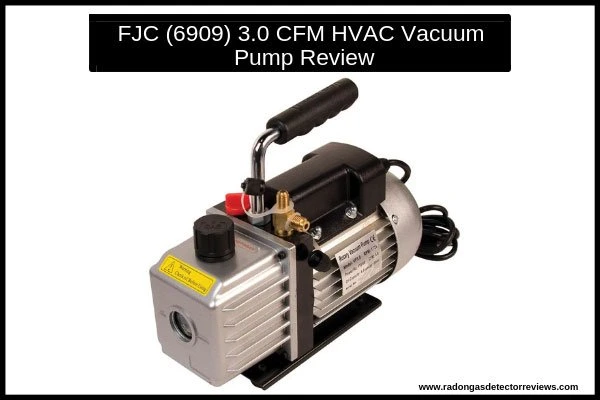
The 3 CFM evacuation is suitable for most HVAC applications. It has a convenient, easy-grip handle that ensures safety when using the vacuum pump. When it comes to affordability, the pump scores brownie points again. JFC 6909 is lightweight, durable, and suitable for prolonged use. However, this one's not compatible with commercial HVAC jobs but is suitable only for home use. Also, the oil comes included for even more ease, and you can always check the levels from the available sight glass. But, all in all, the pump serves its purpose, and you'll struggle less. Also, there aren't any heating issues, and the pump works without unnecessary vibrations or sounds.
- Solid performance.
- Faster evacuation.
- 1/3 HP motor.
- Lightweight.
- Comes with oil.
- Durable construction.
- Value for money.
- Noiseless operation.
- Spillage is possible.
9. ZENY 3, 5 CFM Single Stage 5 Pa Rotary Vane Economy HVAC Vacuum Pump Review
Zeny 3, 5 CFM Single Stage 5 Pa Rotary Vane Economy Vacuum Pump is a high-quality, lightweight, and durable piece of equipment that delivers a thorough evacuation.
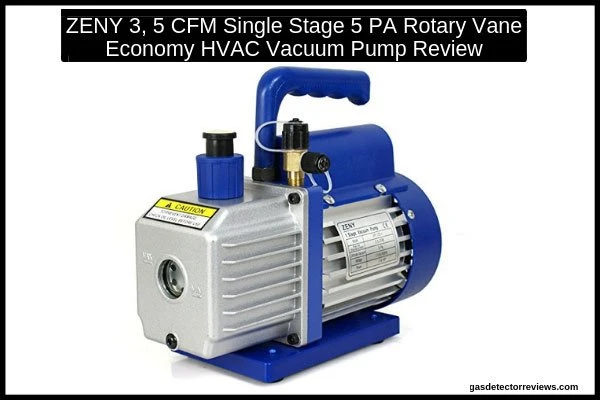
It operates quietly and is a value-for-money product that can work for extended hours without any hassles. The pump draws a vacuum pretty quickly. The non-slip handle makes every operation safe and easy. The aluminium casing is another rich feature, making this one of the best HVAC vacuum pumps. The direct-drive motor is capable of self-maintenance. This enables better functionality. Making space for a sight glass left behind the dipstick days of the past. And not just this, the oil valve has also been strategically designed, i.e., facing downward to allow better drainage.
- Noiseless operation.
- Durable design.
- Affordable.
- Built-in cooling fan.
- 5 PA vacuum.
- 3, 5 CFM.
- Lightweight.
- Non-slip grip.
- Consistent flow.
- A little low on power.
- Not too easy to use.
- Overheating issues.
10. TMS 3 CFM Single-Stage Rotary Vane HVAC Vacuum Pump Review
Talking about the TMS 3 CFM Single-Stage Rotary Vane Vacuum Pump, this one's well-suited for professional HVAC operations.
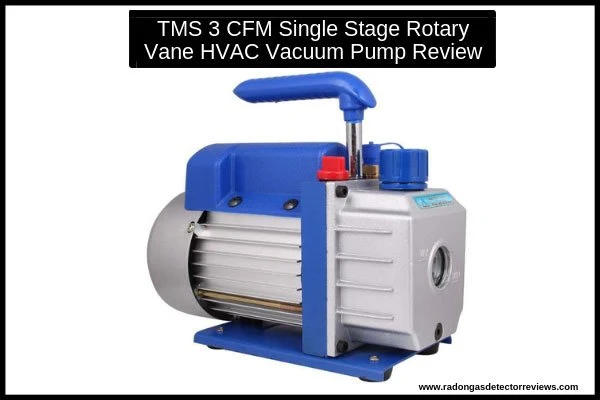
It effectively removes contaminants from a system, enabling extended, hassle-free operation. The equipment comes with a sight glass to help you monitor oil levels. This also simplifies the maintenance work. Gripping is slip-free, preventing falls or careless operation.
What other jobs can you do with this best HVAC vacuum pump besides regular air conditioning tasks? The pump can be used for plastic hot forming, gluing, degassing, and sealing jars for food preservation. All in all, the noise-free, efficient, and easy start technology makes this a wonderful pump. The direct-drive motor, aluminium casing, and low-noise operation improve its rating amongst the best HVAC vacuum pump reviews.
- Affordable.
- Durable build.
- Compact and lightweight.
- Non-slip gripping.
- High performance.
- 5 PA vacuum.
- High performance.
- Great for smaller HVAC jobs.
- Insufficient user manual.
Final Thoughts
The above-mentioned is the best HVAC vacuum pump review 2026 and the top 10 HVAC vacuum pumps that are here to stay and go a long way. These are well-suited for HVAC jobs, both professional and residential. The reviews will help you make an informed decision and get the equipment that your budget and needs require, along with the right specs. Every product on this list stands out from the rest and performs best for demanding jobs. We've considered the actual CFM of the products, along with their inlet capacities, to deliver the best results for you!
How does the HVAC Vacuum Pump work?
Here’s how the HVAC vacuum pump works and how to use it with absolute ease. Once you understand how it works,n you’ll be able to figure out the exact vacuum pump used for individual or commercial purposes.
Understand it this way: when HVAC installations require repair work, it is the primary step to recover system refrigerant for reuse. Once done, the troubleshooting task can begin. Next, it is important to make sure there's no leakage. The evacuation process comes thereafter. The vacuum pump is used to remove the toxic vapour or moisture from the refrigerant setup. Before proceeding with a full test, the charging process must be completed.
Inside the system, only oil and refrigerant need to be circulated. Moisture can enter even after years of use, causing extensive damage.
Since vacuum pull-out is the final step of the repair process, you will have to achieve a near-vacuum state. System pressure herein must be below atmospheric pressure. An electronic gauge can accurately measure the vacuum levels and finally achieve the state needed for the equipment to run smoothly.
The moment a low-vacuum state is about to arise, moisture or other unwanted vapours begin to evaporate from the system. (Also, take note of the oils you use while operating the pump to achieve the specified state.)
Ensure the following for a better evacuation:
- The higher the CFM, the better the evacuation.
- The presence of the sight glass oil is to monitor levels.
- Anti-suckback is mandatory to prevent system damage from the pump oils.
- Gain the lowest vacuum level possible.
- The hose size, gauge placement, pump size, and several other factors play an important role in getting the job done. For instance, you may use a small-sized HVAC pump with a slightly larger hose to achieve a faster pull than with a small hose on a large pump. Simple rule!
Advantages of the HVAC Vacuum Pump
Here are the advantages of the HVAC vacuum pump:
- HVAC vacuum pumps are easy to start and operate, and require low maintenance.
- An HVAC vacuum pump helps keep a new setup moisture-free.
- It allows for adequate cooling.
- It prevents the development of unwanted contaminants in water, etc.
- HVAC vacuum pumps help maintain the levels at 2,000 microns or below. Anything above it would mean that the system still requires the evacuation of the non-condensed air.
- It maintains the system's efficiency.
- Electroplating or motor insulation damage does not hinder the process.
- The compressor remains corrosion-free, unlike other components that may be affected by refrigerant acid.
- Any level above 2500 microns indicates a gross leak to be pulled out to remove the unwanted vacuum.
- It keeps the system dry, clean, and functional.
- It removes unwanted air and vapours from the HVAC system to prevent associated damage.
- You, of course, imply advanced technology.
- The pump prevents in-warranty failures.
- HVAC vacuum pumps are versatile equipment used for a range of applications.
- These are designed to powerfully vacuum at a high level.
- Some of the pumps are even portable, making them easy to carry.
What Size Vacuum Pump Do You Need?
The primary purpose of an HVAC vacuum pump is to remove moisture and vapours from the refrigerant system. These are serious threats, and most of the time, the damage even goes unnoticed. So, a low-pressure pumping system boils and evacuates the moisture.
But what size fits best for such evacuation jobs? Check the CFM rating, which essentially indicates the air pressure of a particular model. Better suction results in faster vacuum creation. And, as far as the size is concerned, this might be handy information:
| SIZE | SYSTEM |
| 1.2 CFM | Less than 10 tons |
| 4 CFM | Less than 30 tons |
| 6 CFM | Less than 50 tons |
| 10 CFM | Less than 70 tons |
Things To Consider Before Buying an HVAC Vacuum Pump (Buying Guide)
No matter what you purchase, you’ll need to consider a few things before making an informed buying decision. Therefore, here are a few important things to consider before buying the HVAC vacuum pump. This is the ultimate buying guide for both first-time customers and commercial technicians.
- Capacity
Pumping capacity must be the first thing to consider before making a purchase decision. The exact measurement is CFM (Cubic Feet per Minute). Better the CFM, faster, and more efficient vacuum pump. Therefore, if you purchase a vacuum pump, make sure to check the pumping capacity.
- Motor Power
This is the heartbeat of your product. If the motor doesn’t function correctly, the pump will not operate. Therefore, measuring the motor's load capacity should be your primary responsibility. Certain jobs require more horsepower, and some others do not. So, depending on what you work on, buy a pump that suits those needs. Also, keep in mind that the more horsepower, the louder the noise generated. However, modern pumps also offer a noise-free operation despite a higher motor power. But such pumps can be somewhat expensive!
- Weight
Yet another critical factor to keep in mind is the weight of the product that you are about to purchase. Since certain tasks involve a lot of mobility, while others involve limited movement, it is wise not to buy heavier equipment. This would allow you to easily switch between one position or point and the other, as well as manage your hectic routine.
- Glass
Here we are talking about the sight glass of the HVAC vacuum pump. It helps you determine the oil level. This glass allows you to constantly monitor the levels. But just make sure it is not the one that gets foggy or tinted, or else it would complicate your task.
- Sound
This is an important factor to consider when purchasing an HVAC vacuum pump. Such mechanical equipment is bound to produce some amount of sound, or you can say noise, while operating. Therefore, it is your responsibility to ensure you can tolerate the noise in the long run, or it can become problematic. Particularly when working indoors and when giving instructions, noise levels need to remain at a minimum. Therefore, pick the HVAC vacuum pump that does not hinder your progress but rather hastens the process.
- Oil Drainage System
The oil used by the HVAC vacuum pump tends to become obsolete over time. That is the time when you drain the oil before it even starts to hamper your work. The rotational parts of your pump can behave crazily if the drainage system isn’t appropriate. Therefore, equipment with a larger oil drainage valve is the appropriate model for both personal and commercial use. The opening must be positioned at the bottom and be slightly angular for quick access.
- Oil Plug
The oil plug needs to be well-designed so as to facilitate better soil drainage. The opening should be sizable – the bigger the better, and even more convenient.
Safety & Maintenance Tips for HVAC Vacuum Pump?
Here are a few must-follow safety & maintenance tips for the HVAC vacuum pump:
- Make sure you read the manual and other instructions carefully before operating the equipment.
- The cords, as well as switches, need to be free from any physical defects.
- If you feel excessive heat can build up in a particular area, do not operate the pump.
- Do not bring the HVAC pump into use near combustible materials.
- You must keep the tubes free from wear and tear.
- The solvents used must be 100% compatible with the equipment.
- Keep the water away.
- Do not leave the gas ballast open for too long.
- Drain the hoses for a tighter fit.
- Regularly perform leak tests.
- Keep checking the oil level regularly from the oil tray.
- Make sure to replace the oil whenever required.
- Properly dispose of used oil, as it’s a waste material.
Frequently Asked Questions for Best HVAC Vacuum Pumps Review - FAQs
When using an HVAC vacuum pump, certain questions arise. Therefore, here are some of those Frequently Asked Questions about HVAC vacuum pumps:
Q1. My HVAC vacuum pump doesn’t reach the max levels. Why?
Answer: Most likely, the cause of this issue is an air leak. There are several other reasons; however, leakage is the primary one.
Q2. My HVAC vacuum pump is evacuating too slowly. What could be the reason?
Answer: Dirt or other contaminants trapped in the intake port is one reason. It can damage any part of the equipment. Other than that, stay cautious of any physical defects. Keep a check on all the parts throughout the time.
Q3. How can I detect a leakage?
Answer: Identify if it is an actual leak or a virtual one. If it is real, the leakage would enter the vacuum chamber from an external source, whereas the virtual one would generate a gas load within the vacuum system.
Solution? To begin with, lower the chamber pressure to achieve the maximum level. With a Torr gauge, ascertain the rise. If it reaches atmospheric pressure, it's a real leak. However, if the pressure increases over 24 hours and stops at a level below atmospheric pressure, it's a virtual leak. Use a Helium leak detector to identify the real leak and its level, or get a partial/ total pressure gauge to read the virtual leak levels.
Q4. Which HVAC vacuum pump is best for me?
Answer: Honestly, there's no single piece of equipment that we can suggest. However, it is you who can make an informed choice to pick the right kit. Considering your job, the exact application, budget, preference, weight, and other general compatibility aspects, you can pick the most suitable vacuum pump.
So, choose from our best HVAC vacuum pumps review to ease the selection process.
Q5. The HVC booster pump starts upon a short delay. What could be the reason?
Answer: Repair or replace the same. The connecting wires may be defective, or the electrodes may be broken.
Q6. Why does my vacuum pump consume excessive power?
Answer: Either the impellers are rubbing against each other, or the discharge opening is too high, creating a difference in suction levels. So, make sure to check the gauge readings, discharge ends, and system impellers to ensure accurate pressure levels.
Q7. What should I do if the gear overheats?
Answer: This indicates inadequate lubrication or excess oil. Therefore, maintain the correct oil levels. Also, make sure you replace the used/ dirty oil and get the alignment right.
Q8. The equipment is making a loud knocking sound and heavy vibrations. What to do?
Answer:
Reasons:
- Improper mounting
- High discharge opening
- Worn-out bearings
- Differential pressure
- Out of the time unit
- Loose pulley
Solution:
- Retime the impellers
- Pipe strains must be relieved
- Correct the mounting alignment
- Assure the gauge readings
- Replace bearings
- Fasten the pulley/coupling
Final Words
For an HVAC technician, a vacuum pump isn't new. You have an idea of what this equipment is about. You are even aware of how to get the related jobs done. The HVAC vacuum pump can perform several related tasks. It is just about having the right HVAC vacuum pump for the job you have undertaken. Take a look at our best HVAC vacuum pumps review to make the right purchase decision. We will help you buy the correct model that best suits your requirements.
A poor purchase decision would only result in an incorrect settlement. But our reviews will help you achieve the best return on your investment.